Disaster Preparedness
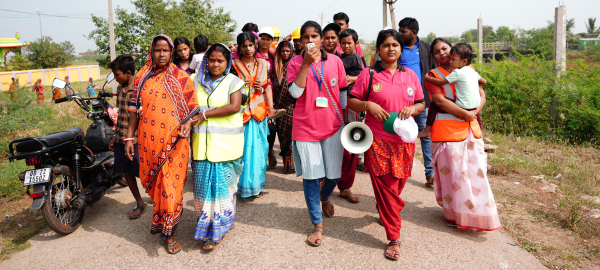
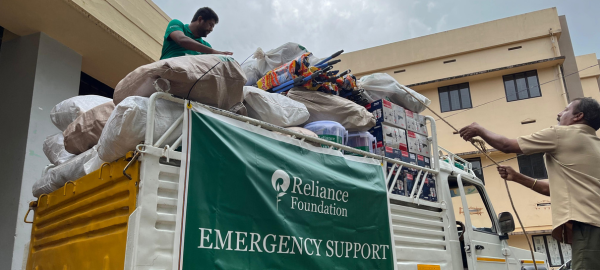
Reliance Foundation strengthens community preparedness for disasters through enhanced early warning systems, anticipatory action and localised risk reduction efforts. Using GIS, digital platforms and a multi-channel communication approach, we ensure timely dissemination of alerts, especially to vulnerable communities.
Our early warning programme equips communities with predictive insights and critical information, enabling them to take informed action ahead of disasters and minimise loss of life, assets and livelihoods.
Early Warning and Early Action
Early Warning and Early Action (EWEA), also known as anticipatory action, focuses on proactive disaster preparedness and risk reduction by ensuring that timely alerts are translated into effective preventive measures to minimise the loss of lives, livelihoods, and assets. By bridging the gap between hazard detection and on-ground response, EWEA enables communities, governments, and organisations to act before disasters occur. This approach aligns with the Sendai Framework for Disaster Risk Reduction, which aims to substantially increase the availability of and access to multi-hazard early warning systems and disaster risk information by 2030.
Through its Disaster Management programme, Reliance Foundation strengthens last-mile early warning dissemination to enhance the timely preparedness of communities against climate-related hazards and reduce disaster impacts. Reliance Foundation partners with national nodal agencies such as the Indian Meteorological Department (IMD) and the Indian National Centre for Ocean Information Services (INCOIS), along with regional institutions, to receive timely advisories and disseminate them widely to support early and informed action.
Leveraging Geographic Information Systems (GIS) and digital platforms, Reliance Foundation enhances early warning efforts across the entire continuum, from risk assessment to communication and response planning. Its ability to reach large numbers of vulnerable populations through multiple digital and physical channels, combined with GIS-driven predictive analysis, enables targeted advisories and anticipatory actions that support communities in preparing effectively for impending hazards.
Capacity Development
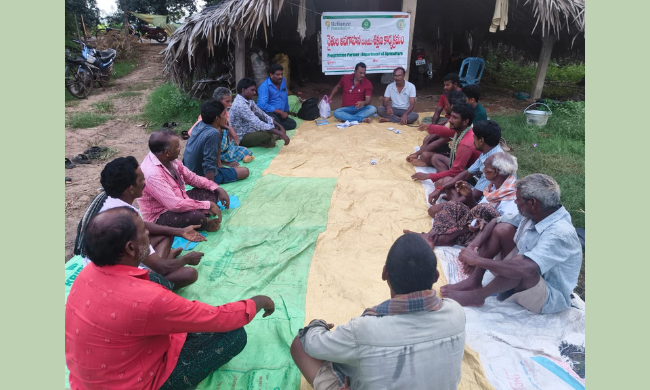
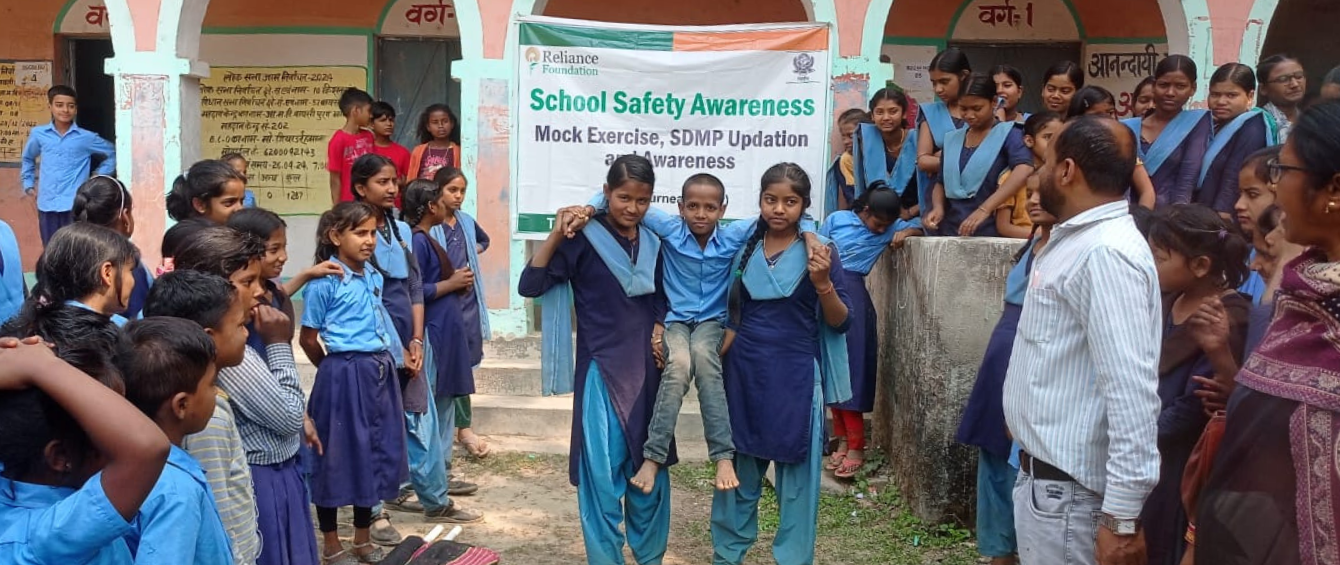
Reliance Foundation is building resilient communities by strengthening capacities to withstand and respond to disasters. We are developing a cadre of trained community volunteers skilled in first aid, search and rescue, public health risk management and livestock protection. Communities are supported to develop disaster preparedness plans, and regular mock exercises are conducted with local administration.
Our capacity development initiatives include creating repositories for public health risk communication, training master trainers and community cadres on WASH-focused public health management in emergencies, and integrating gender-responsive approaches including Menstrual Hygiene Management during disasters. ASHA and Anganwadi workers, along with women leaders, participate extensively in these initiatives.
For livestock protection, preparedness modules include Livestock Emergency Guidelines and Standards (LEGS), Animal-Centric Technological Interventions in Emergencies (ACTIE), early warning systems, handling and feeding practices, and zoonotic disease management. Trainers from the Veterinary Emergency Response Unit of the Animal Husbandry Department also contribute to these efforts.
School Safety
Reliance Foundation is committed to creating safer and more resilient learning environments by actively engaging schools in disaster preparedness and risk reduction. By strengthening awareness, planning, and response mechanisms, the initiative supports schools in building resilience and improving their ability to respond effectively to emergencies.
A key component of this effort is the development of School Disaster Management Plans (SDMPs), which is a structured framework that helps schools prepare for, prevent, respond to, and recover from disasters by identifying hazards, vulnerabilities, risks, and existing capacities. These plans are designed to ensure the safety of students, teachers, and staff while minimising disruption to education during emergencies. Preparing children on safety measures is critical, as managing large numbers of students during a disaster can be challenging without prior planning and practice.
Reliance Foundation undertakes a range of activities to strengthen school-level preparedness. These include conducting training of trainers for teachers on school safety, supporting School Management Committees in preparing and updating school safety plans, and organising regular mock exercises at the school level. Mock drills are conducted in collaboration with key government departments, fostering coordination and clarity of roles during emergencies.